Bedtime Stories in Two Languages
How a calm nightly story gently nurtures a second language or keeps a heritage language alive, and what the research on read-aloud really shows.
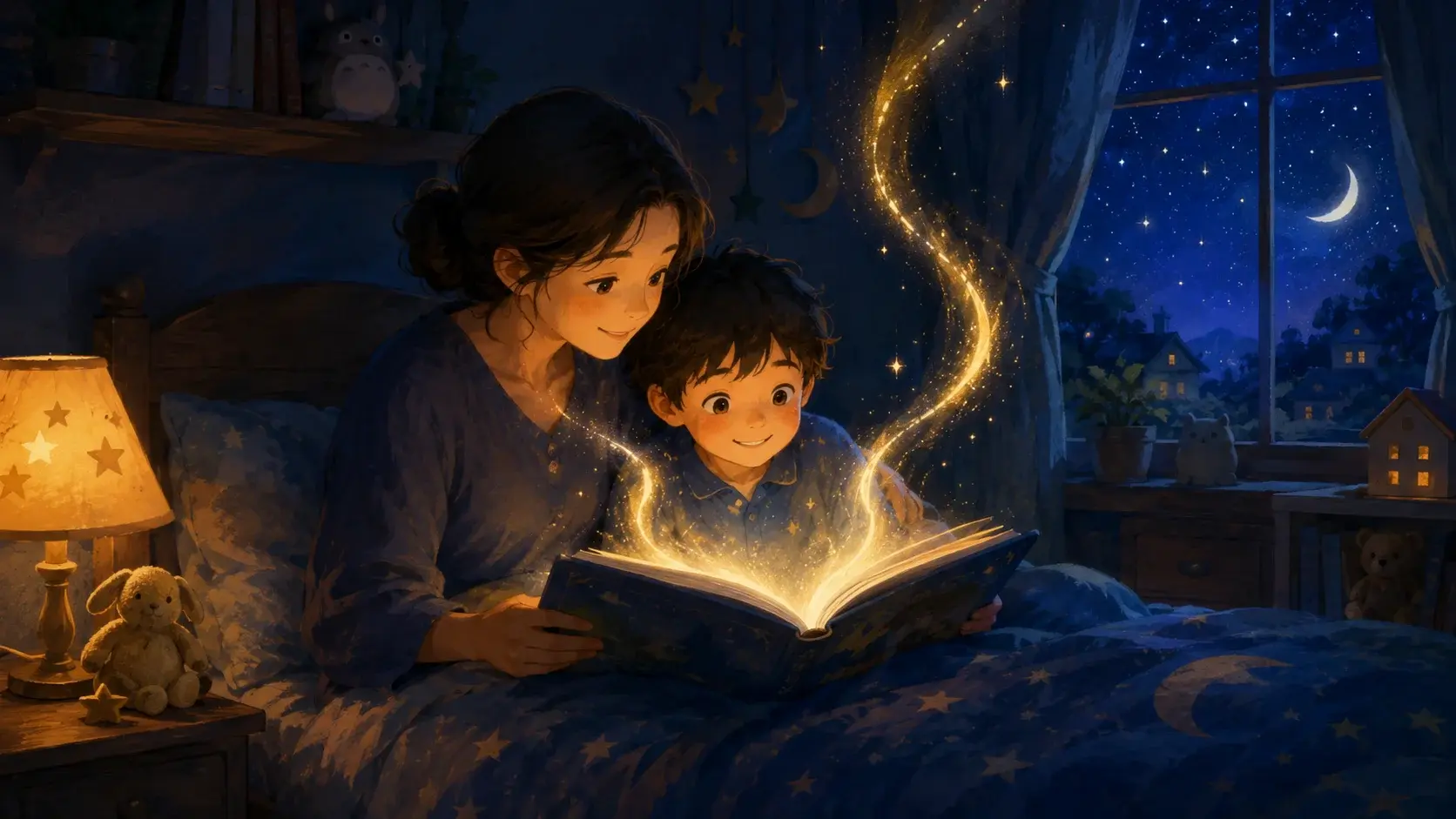
It is late, and the house has gone soft and quiet. Your child is tucked in, and you open tonight's story. Maybe the words are in the language you grew up with, the one your own parents read to you. Maybe they are in a language you are still learning together. Either way, for the next few minutes, two of you are sharing the same small world. That ordinary moment turns out to be one of the gentlest ways a child ever meets a second language.
Children learn the language they hear
The most reliable thing researchers know about young bilinguals is also the most comforting: children grow in the language they actually hear. In a review of how bilingual children develop, Hoff and Core (Seminars in Speech and Language, 2013) describe how the balance shifts with a child's daily life. When a home leans toward one language, children grow stronger in that one. When the balance changes, because of a visiting grandparent or a new routine, their skills change too. There is no secret trick here. There is just exposure, given warmly and often.
That is why a nightly story carries real weight. It is a small, repeated dose of rich language, the same characters and rhythms returning night after night, with a parent right there to share them.
Why a story beats a screen
Not all exposure is equal. The same review makes a striking point: language heard in the context of book reading is particularly supportive of a child's development in that language, while language heard through television is not particularly supportive. A story read together is slower, more responsive, and full of pauses where a child can ask, point, and wonder. A fast screen rarely waits.
So the bedtime story is not a lesser way to grow a language. By this measure, it is one of the better ones, precisely because it is calm and shared.

What read-aloud can do for a second language
The effect can be measured. In a large cluster-randomized trial, Grover, Rydland, Gustafsson and Snow (Child Development, 2020) followed 464 young dual language learners in Norway who were learning Norwegian as a second language. Children whose classrooms and homes were built around shared book reading made clear gains in their second-language vocabulary, with smaller but real gains in grammar and in their ability to take another person's perspective. The researchers estimated the overall benefit was roughly equal to a few extra months of language growth.
These were storybooks, read and talked about together. The same simple act you can do at home, on an ordinary evening, with a child who is half asleep.
Keeping a heritage language alive
For many families, the second language is not new at all. It is the heritage language, the one that connects a child to grandparents, to a country, to where they come from. Maintaining it can be quietly hard, because the world outside the home pushes in the other direction.
A study of families raising children with a heritage language (Bilgory-Fazakas and Armon-Lotem, Frontiers in Psychology, 2025) found that parents held on to it most of all for connection: so their children could talk with grandparents and stay rooted in who they are. Reading at home was part of how they did it. As one parent put it, reading in the heritage language develops vocabulary. A story before sleep can be a small, faithful thread back to a family's first words.
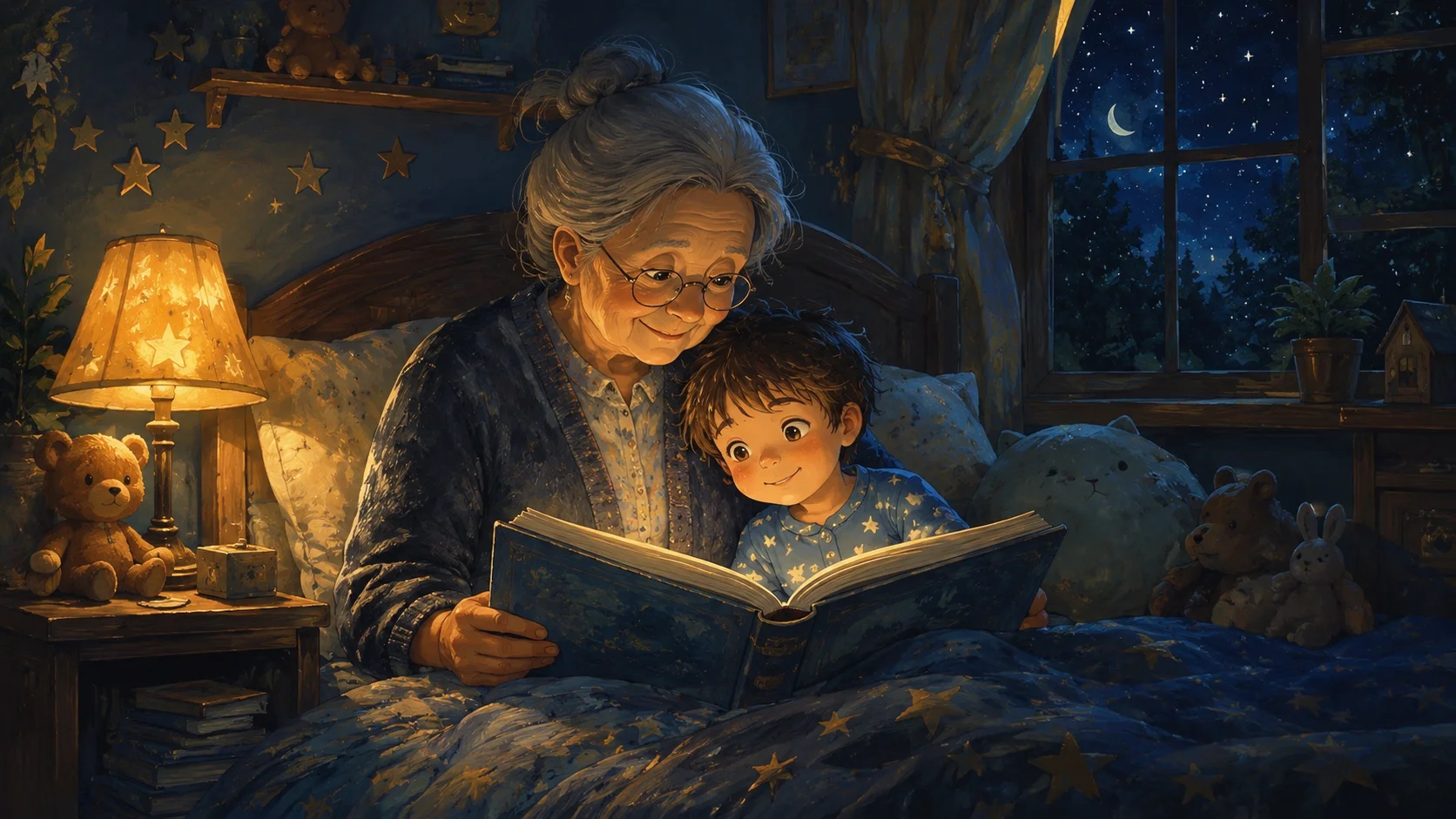
The same story, in five languages
This is the part Dreamtime was built to make easy. Every Dreamtime story carries read-along text and subtitles in five languages: English, French, Spanish, Brazilian Portuguese, and European Portuguese. So a family can settle into one story tonight and read it in one language, then meet the very same tale in another, the same pictures, the same gentle pace, simply switched over.
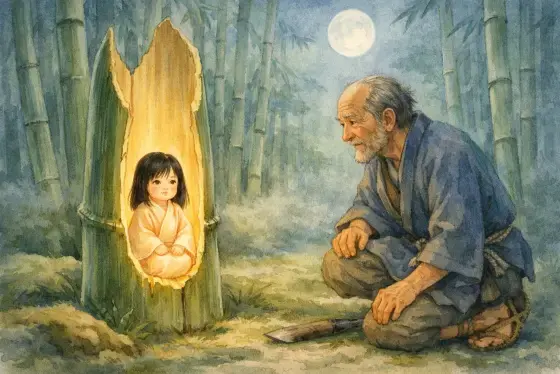
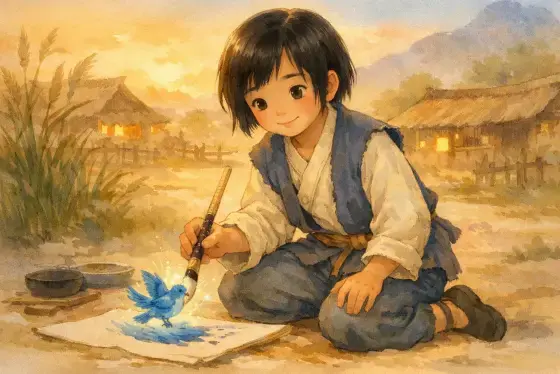
You might wander into a moonlit bamboo grove with Princess Kaguya, a tale carried across the world from Japan. You could watch a boy's drawings come to life in The Magic Paintbrush, a folktale from China. Or you could follow a glowing feather through the night in The Firebird, straight from the Russian story tradition. The stories are ad-free, and they work offline, so a quiet night stays quiet.
You do not need a lesson plan or a perfect accent. You only need the lamp turned low, a story you both like, and the willingness to read it again tomorrow. The language grows in the reading. So do you.
Sources
- Hoff and Core, input and language development in bilingually developing children (Seminars in Speech and Language, 2013)
- Grover, Rydland, Gustafsson and Snow, shared book reading supports bilingual children's second-language learning, a cluster-randomized trial (Child Development, 2020)
- Bilgory-Fazakas and Armon-Lotem, resilient heritage language maintenance (Frontiers in Psychology, 2025)