Why Kids Ask for the Same Story Again and Again
The science of why young children crave the same bedtime story on repeat, why it is healthy, and how repetition quietly builds words and calm.
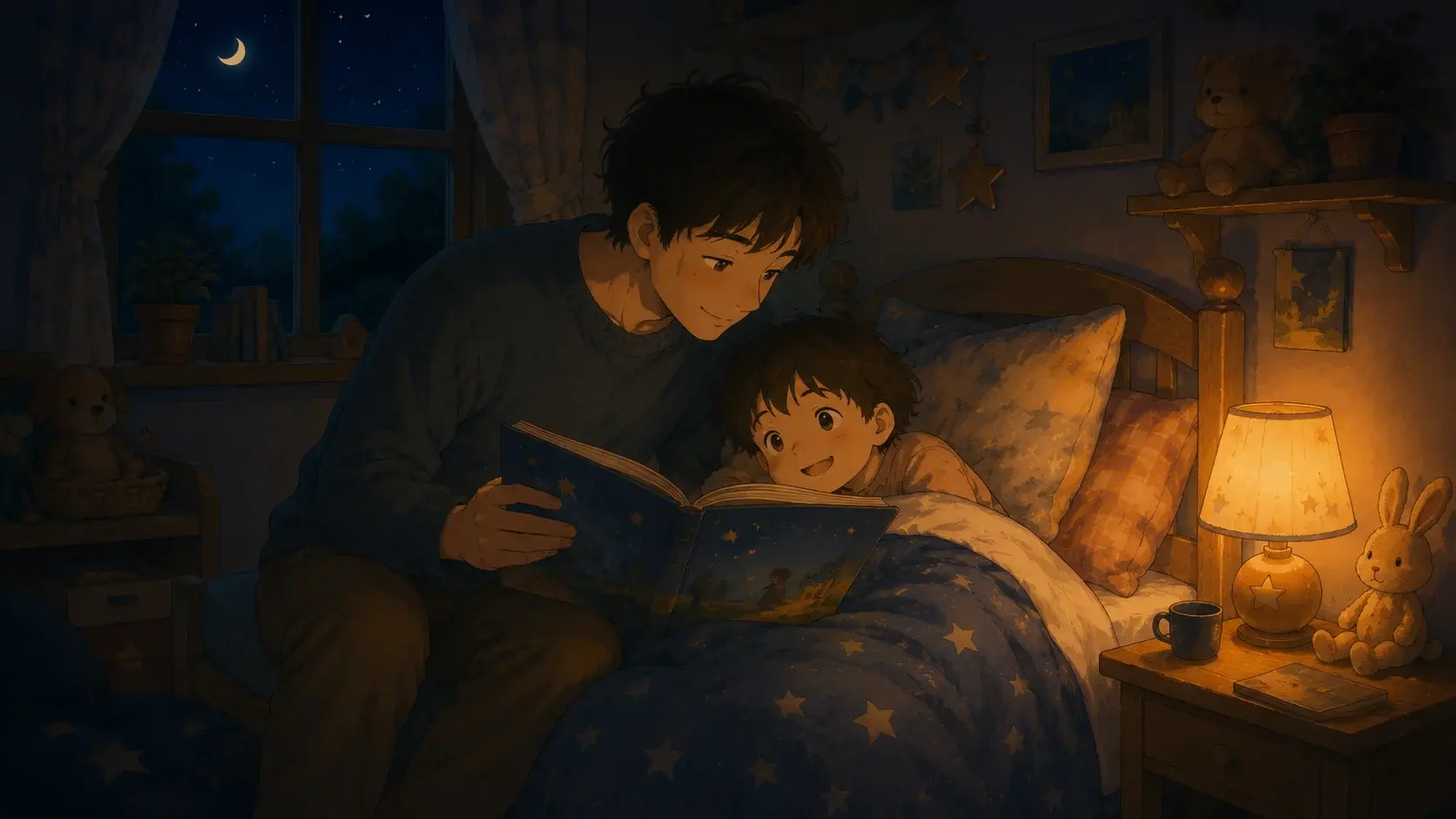
You finish the last page, close the book, and reach to turn off the lamp. A small voice stops you. "Again." You have read this exact story four nights running. You know every word, every pause, the spot where the page sticks. And tomorrow, almost certainly, your child will ask for it once more.
If this drives you quietly to distraction, you are not alone, and you are also not doing anything wrong. That request for the same story again is not a stall or a bad habit. It is one of the healthiest things a young child can ask for, and there is good science behind it.
Repetition is how small children feel safe
Young children live in a world they did not design and cannot control. Days are full of new faces, new rules, and surprises they did not see coming. A story they already know works in the opposite direction. They know what happens next. They know how it ends. Nothing on the page can startle them, and that certainty is its own kind of comfort.
A 2024 systematic review by Selman and Dilworth-Bart in the Journal of Family Theory and Review gathered 170 studies on daily routines and child development. The pattern was clear: routines, the predictable repeated rhythms of a child's day, were linked to positive outcomes across cognition, self-regulation, social and emotional skills, and overall mental and physical health. The connection looked especially strong for self-regulation and executive function, where most of the studies found a positive link. The researchers also found that routines were especially protective for children in stressful or high-risk homes.
A story asked for over and over is a routine in miniature. The same words in the same order, every night, tell a child the same thing the bedtime routine does: you are safe, the world is steady, you can let your guard down now.
"Read it again" is how words stick
Here is the part that surprises most parents. All that repetition is not just soothing. It is teaching.
In 2011, psychologist Jessica Horst and her colleagues Kelly Parsons and Natasha Bryan ran a careful experiment, published in Frontiers in Psychology. They read three-year-olds short storybooks that each slipped in two invented words for two invented objects. One group of children heard the same three stories repeated across a week. The other group heard nine different stories, so they met the new words just as many times, but always in fresh settings.
Right after reading, both groups did fine. A week later, the difference was striking. The children who had heard the same stories on repeat still remembered the new words. The children who had heard nine different stories had, in effect, failed to hold on to them. On the retention test, it was repetition, not variety, that made the new words stick.
The authors put it plainly: it is not the number of different books that matters most, but the willingness to follow that small request to read it again. When the story stays the same, a child's mind is no longer busy decoding a new plot. It is free to notice the smaller things: a word it half-knows, the shape of a sentence, how one moment leads to the next. Each rereading is another quiet pass over the same material, and that is exactly how comprehension and vocabulary settle in for good.
So lean into it, gently
Knowing this changes how the request feels. The fifth reading of the same book is not lost time. It is the reading that does the real work, the one where the words finally stick and the comfort runs deepest.
You can lean into the loop without losing your mind. Read the favorite again, and on some nights add a second story alongside it, so the beloved one keeps its place while a new one slowly earns its own. Children are happy to grow a small shelf of stories they love, then orbit back to each in turn.
Where Dreamtime fits
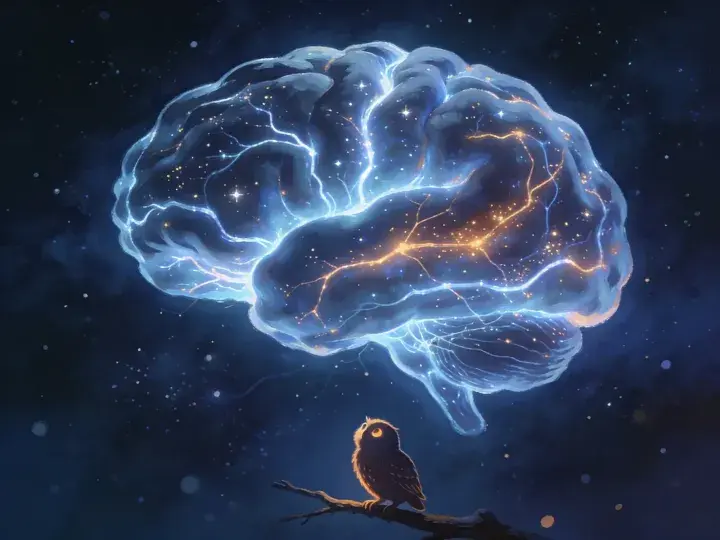
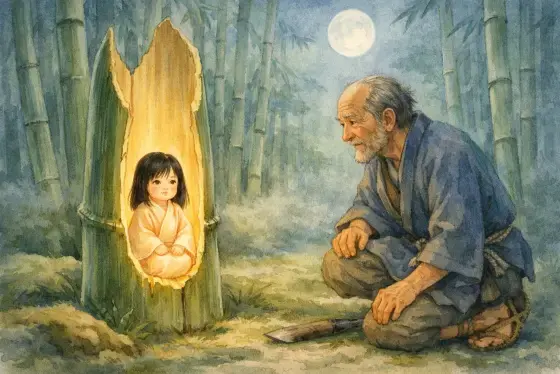
This is the rhythm Dreamtime was built around. A child can return to the same story as many times as they like, and there is no extra cost, no nudge to move on, and no advertising breaking the spell. Tonight that favorite might be Sleep and Dreams, the soft wondering about what happens once the eyes close. Next week it might be the marvel of the mind itself in Your Brain, the Most Complex Thing You Carry, or the gentle glow of How Fireflies Light Up the Night. And for the child who never tires of one wondrous tale, the old folktale of Princess Kaguya waits to be heard again and again.
Because stories save offline and play with no ads, the loop belongs to you and your child, on the long drive or the late night when the same story is the only one that will do.
So the next time that small voice says "again," you can smile and turn back to page one. Your child is not stuck. They are doing precisely what a growing mind is meant to do.