Sea Creatures That Glow: The Science of Light
How ocean animals make their own light: the cold, near heatless chemistry of bioluminescence, told warmly for parents, with calm stories to match.

Picture a boat at night, far from any harbor lights. A child trails one hand in the dark water, and the wake behind the hull begins to glow, a cool blue light that flickers around each finger and fades the moment the water goes still. Nothing has been switched on. The sea itself is making light.
Plenty of ocean animals do this. They are not reflecting the moon or catching a stray beam from above. They carry the light inside their own bodies and switch it on when they need it. Once a child knows that, the dark ocean stops being only scary and becomes one of the most quietly magical places on Earth. Here is how the glow actually works, and what it is for.
A light that makes almost no heat
The trick is a chemical reaction. According to NOAA, an animal mixes a light making molecule called luciferin with oxygen, helped along by a partner molecule called luciferase, and the reaction gives off light. The Woods Hole Oceanographic Institution describes the same pairing: luciferin and luciferase react with oxygen, and the result is light, usually blue-green in the sea because those colors travel best through water.
The wonderful part is what the reaction does not make: heat. A candle flame is hot because most of its energy escapes as warmth. This living light is different. Almost all the energy comes out as glow rather than warmth, which is why scientists call it cold light. A glowing animal can rest in your imagined palm without ever feeling warm.
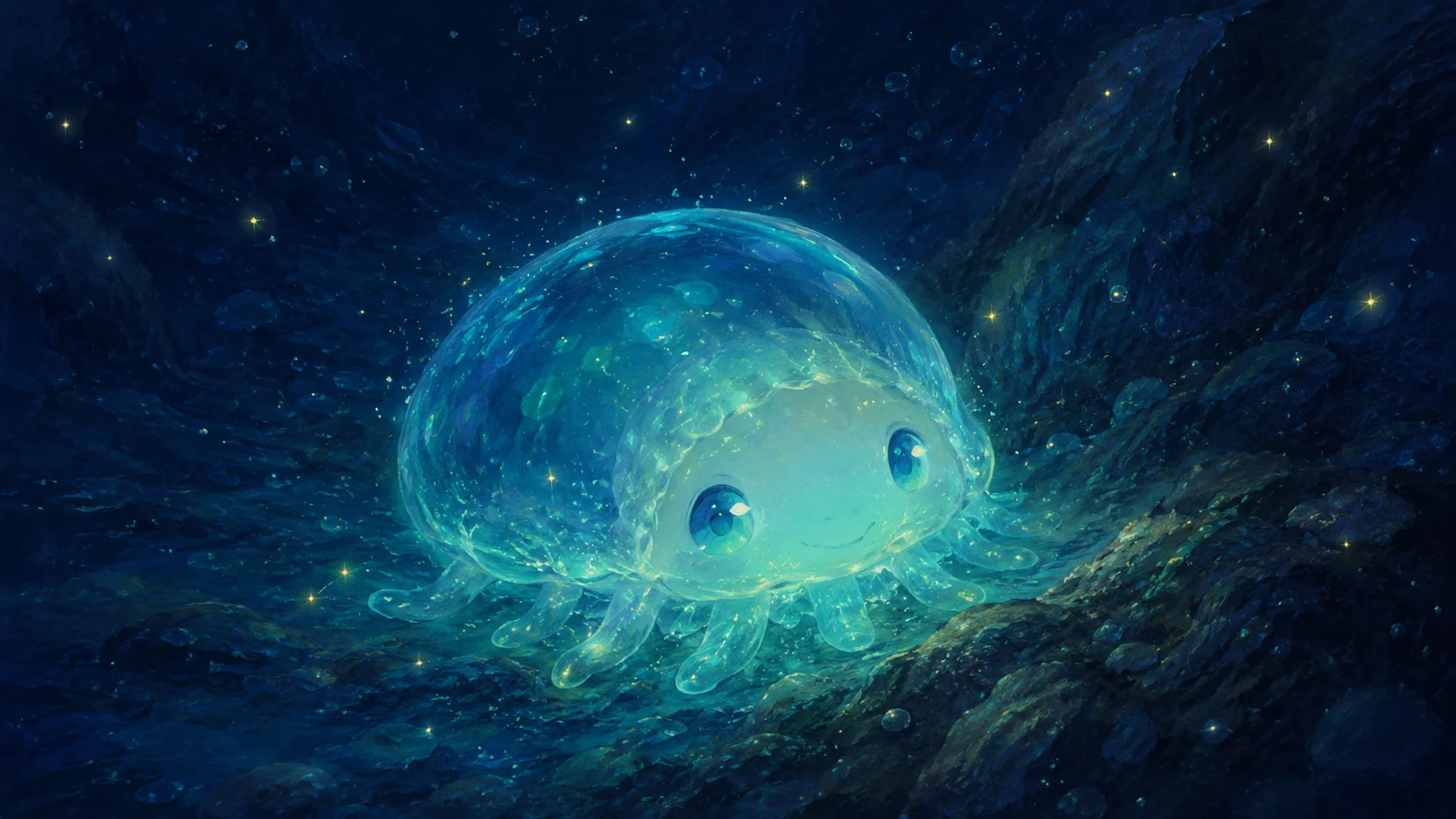
The deep sea is full of light
We tend to think of the deep ocean as pitch black, and most of it is. Sunlight fades out long before you reach the bottom. But that darkness is exactly why so many animals there learned to make their own light.
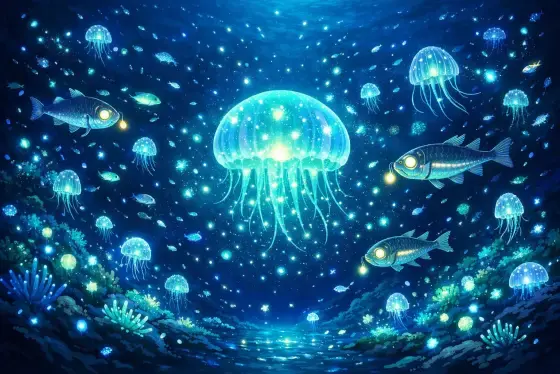
Researchers at MBARI counted the glowing animals in the water off California, from the surface all the way down toward the seafloor. Across more than 350,000 animals, Séverine Martini and Steve Haddock found that roughly three quarters of them could produce their own light, a result they published in Scientific Reports in 2017. Down in the deep, NOAA notes, bioluminescent creatures turn up everywhere from the surface to the deep seafloor. Making light is not the exception there. It is closer to the rule. Your child can sink gently into that glowing world in The Deep Sea That Glows.
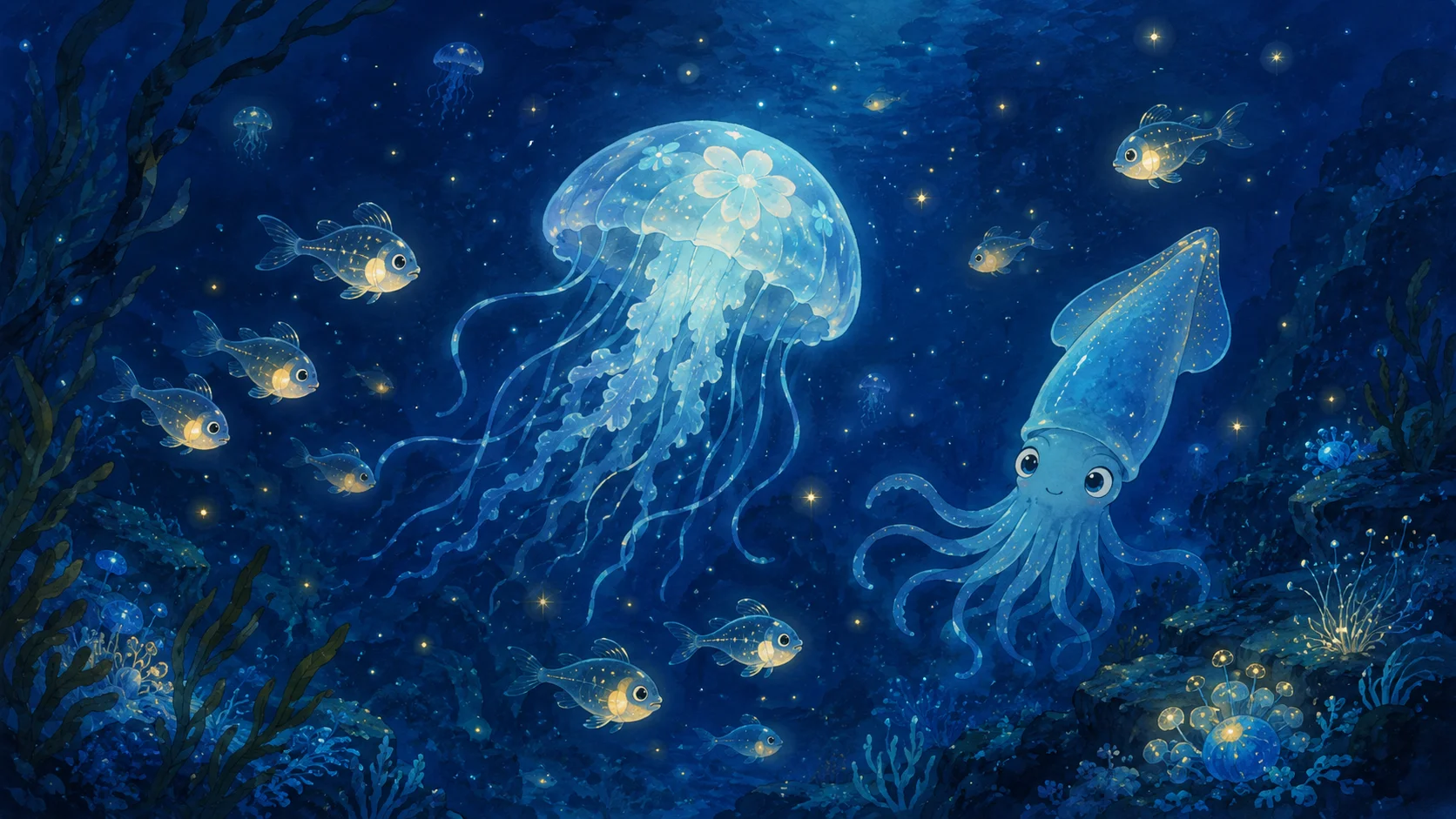
The anglerfish fishes with a lantern
One famous deep-sea hunter turns its light into bait. The anglerfish carries a little glowing lure that dangles in front of its toothy mouth, as Woods Hole describes it, a soft lamp held out into the dark. Small curious creatures drift toward the only light around, and the anglerfish waits.
Here is the surprising twist: the anglerfish does not make that light by itself. The glow comes from tiny bioluminescent bacteria living inside the lure, a partnership where the fish gives the bacteria a safe home and the bacteria give the fish a lantern. Two very different living things, glowing together, to solve the problem of a world with no sun.
Glowing squid and a sea that sparkles
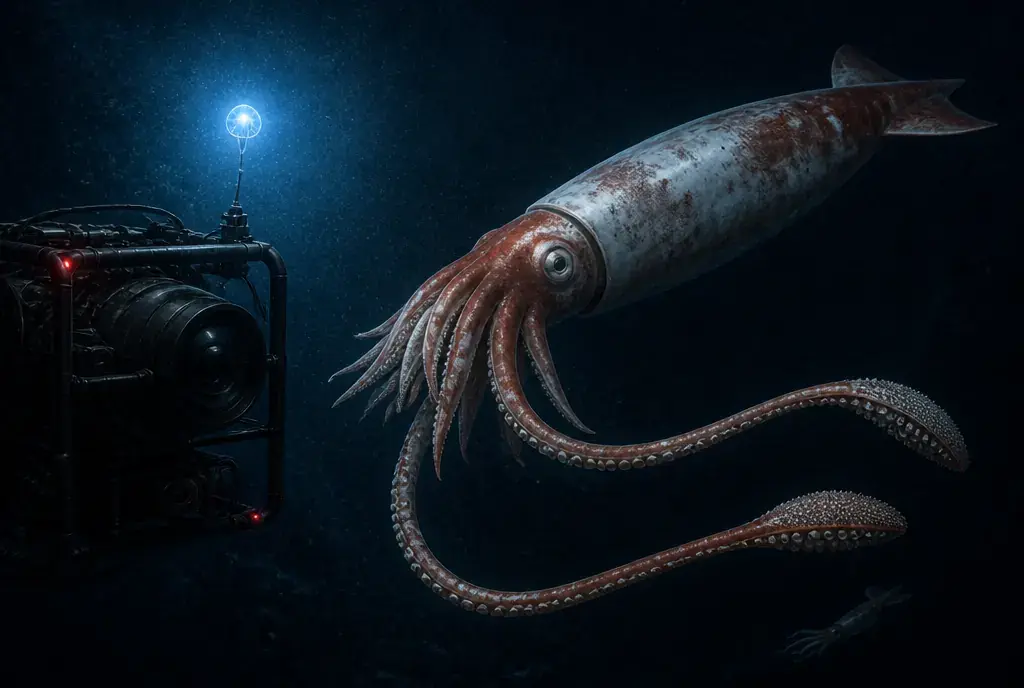
Not every glowing animal lives in the crushing deep. In Toyama Bay in Japan, a tiny creature called the firefly squid comes up toward the surface in spring to spawn, roughly February through July, and the water fills with soft blue light. Each squid is only about three inches long, yet its body is dotted with light making organs called photophores that shine blue, so a whole bay can shimmer at once. Bigger relatives keep their secrets in the dark too, which is part of why these animals stayed mysterious for so long, a story your child can follow in How the Giant Squid Stayed Hidden So Long.
That sparkle a child sees in the boat's wake is smaller still. It comes from tiny drifting plankton that flash blue when the water around them is jostled, a quick startle of light that can confuse whatever bumped into them.
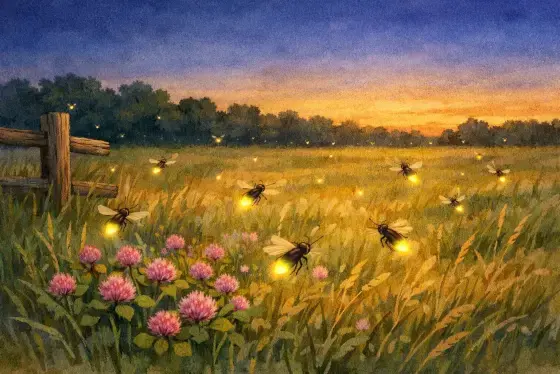
And it is not only the sea that glows. On a summer lawn, a firefly makes its own cold light through the very same kind of luciferin reaction, blinking a private code to find a mate. You can watch that gentler version of the magic in How Fireflies Light Up the Night.
A world worth wondering about
A glow with almost no heat, a fish that fishes with bacteria, a whole bay lit by squid: these are real, and they are the kind of facts that make a child go quiet and then ask why. That small pause is curiosity taking hold, and it is exactly how a young mind grows.
Every Dreamtime story takes one true wonder like this and tells it gently, narrated and illustrated, calm enough for the end of the day. So the next time your child asks how the ocean can glow in the dark, you can answer with a story, and let them drift off a little more amazed by the world.
Sources
- NOAA Ocean Exploration, Bioluminescence: an adaptation for deep-sea survival (luciferin + luciferase + oxygen reaction)
- NOAA Ocean Service, What is bioluminescence? (from the ocean surface to the deep seafloor)
- Woods Hole Oceanographic Institution, How does bioluminescence work? (luciferin and luciferase; anglerfish lure)
- MBARI, on Martini and Haddock, three quarters of deep-sea animals make their own light (Scientific Reports, 2017)
- Firefly squid, Watasenia scintillans, size, Toyama Bay, spawning season, photophores (overview)