Screen Time Before Sleep: What the Science Says
Why bright, fast screens before bed delay a child's sleep, what the research really shows, and the calm, low-light wind-down that works instead.

It is the easiest handoff in the world. The day has been long, dinner is a memory, and the tablet buys twenty quiet minutes. Then the screen goes dark, and your child is wide awake, bright eyed and bargaining, an hour past bedtime. You are not imagining it. The screen and the struggle tend to arrive together, and there is a reason why.
The body reads light as daytime
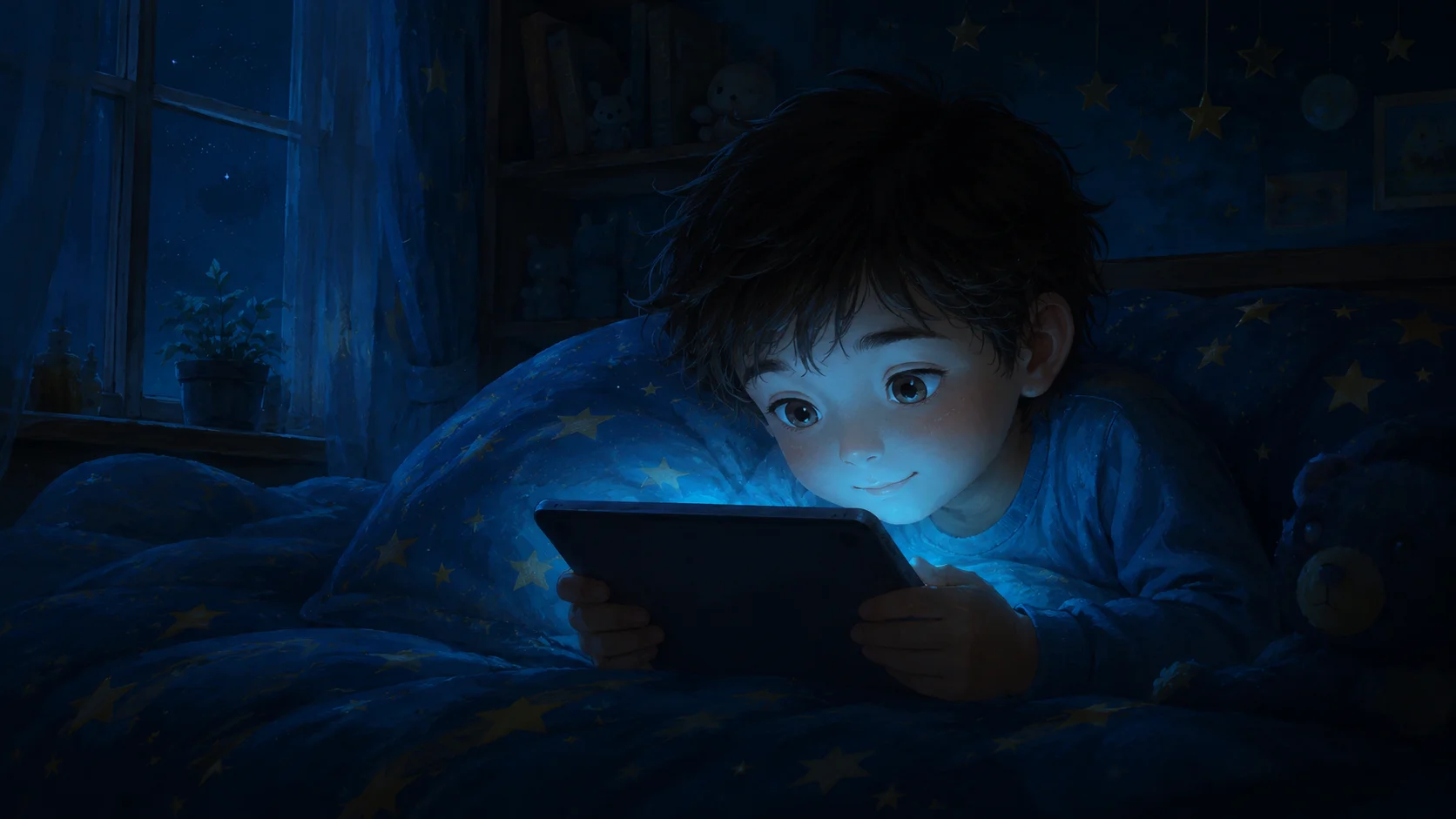
Deep in the brain sits a master clock that decides when you feel sleepy, and it takes its cue from light. Bright light in the evening, especially the blue-rich light that phones and tablets give off, tells that clock it is still daytime and holds back melatonin, the hormone that ushers in sleep. Harvard researchers found that evening blue light suppressed melatonin and pushed the body clock later. In one study, people who read on a glowing screen before bed took longer to fall asleep, made less melatonin, and were groggier the next morning than people who read a printed book. The light alone can move bedtime.
It is not only the light, it is the buzz
The other half is arousal. A fast, interactive, just-one-more-level screen does the opposite of winding a child down: it lifts alertness and heart rate exactly when the body is trying to power off. The American Academy of Pediatrics points to both effects, the melatonin-disrupting light and the simple fact that an engaging screen keeps the brain switched on. A story that ends and a game that never does are very different ways to spend the last half hour of a day.
What the research actually found
The picture is consistent without being alarmist. A 2016 meta-analysis in JAMA Pediatrics, pooling many studies of children and teenagers, found that access to and use of screen media devices near bedtime were linked to less sleep, poorer sleep quality, and more daytime sleepiness. Strikingly, even having the device in the room, not only using it, was tied to worse sleep. The cost is not one dramatic bad night. It is a small tax, paid quietly, night after night.
The simplest fix is also the oldest
The advice that follows is refreshingly low-tech. The AAP, in line with sleep medicine guidance, suggests switching screens off about an hour before bed and keeping them out of the bedroom overnight. Then fill that hour with the same calm, predictable steps each night. (We wrote about why that repetition works so well, in The Science of a Calm Bedtime Routine.) The goal is not to ban every screen forever. It is to protect the narrow, important window right before sleep.
Where a calm story fits
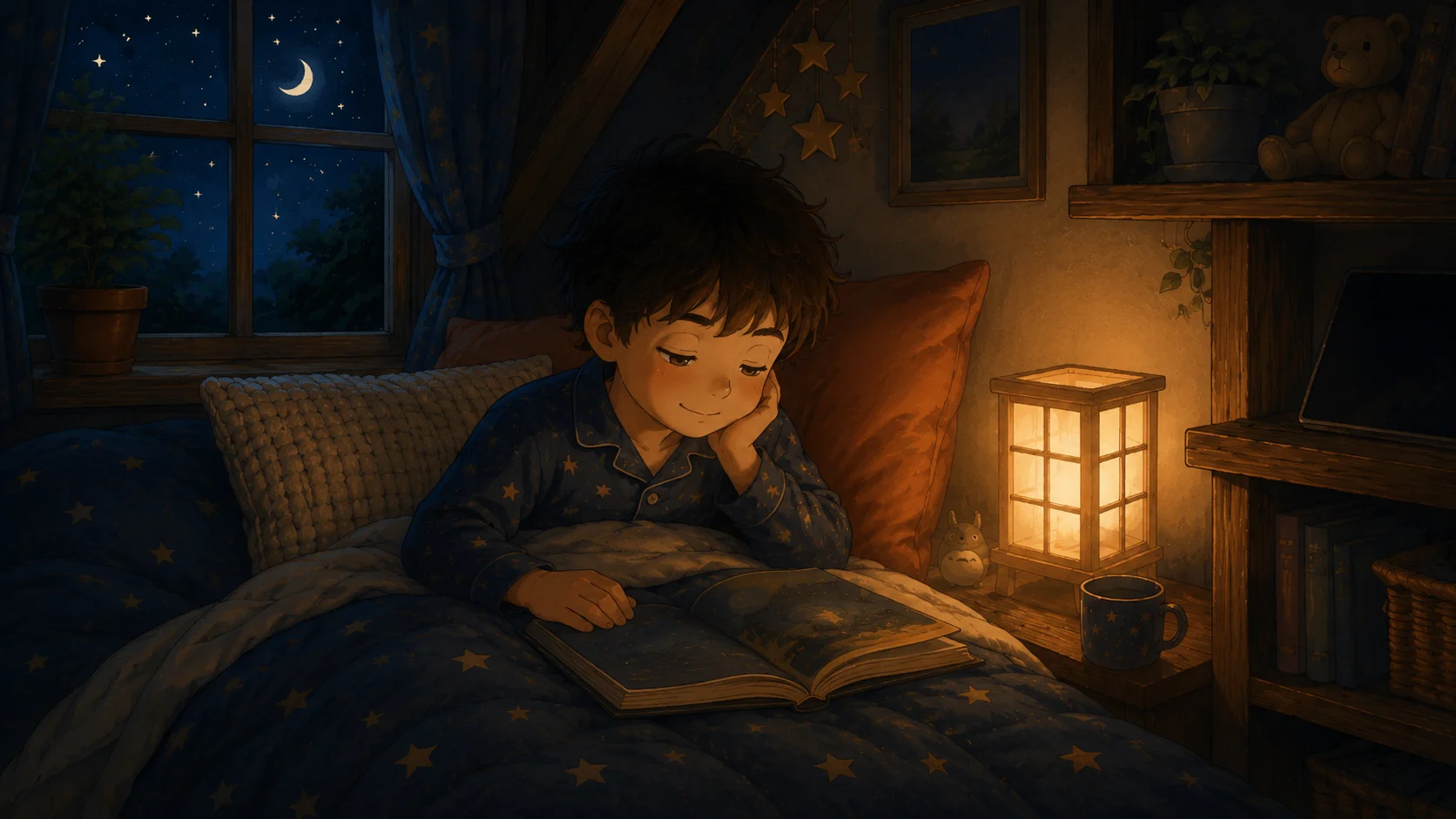
Not all screens are equal, and this is the honest part. A frantic, autoplaying feed and a slow, narrated bedtime story sit at opposite ends of the same spectrum. Dreamtime was built for the calm end: gentle narration, soft storybook illustrations, read-along text, no ads and no endless feed, and it works offline. Used well at bedtime, that means turning the brightness right down, keeping the volume soft, and letting a single story be the last thing rather than the first of ten. You can even let it play with eyes closed, more like an audiobook under the stars.
If you want somewhere calm to land tonight, drift off with Sleep and Dreams, follow a whole season of rest in How Bears Sleep Through Winter, or end on the softest light there is in How Fireflies Light Up the Night.
The science is not really anti-screen. It is pro-sleep. Dim the lights, slow everything down, and give the last minutes of the day to a story that helps your child let go, instead of one more thing that holds on.
Sources
- American Academy of Pediatrics, how screen time affects children's sleep
- Carter et al., screen media devices and sleep, a meta-analysis (JAMA Pediatrics, 2016)
- Harvard Health, blue light and its effect on melatonin and the body clock
- Harvard Medical School, light-emitting e-readers delay sleep (Chang et al., PNAS, 2015)