How Animals Talk to Each Other Without Words
Bees dance, elephants rumble through the earth, fireflies flash in code. The real science of how animals talk to each other, with calm stories to match.
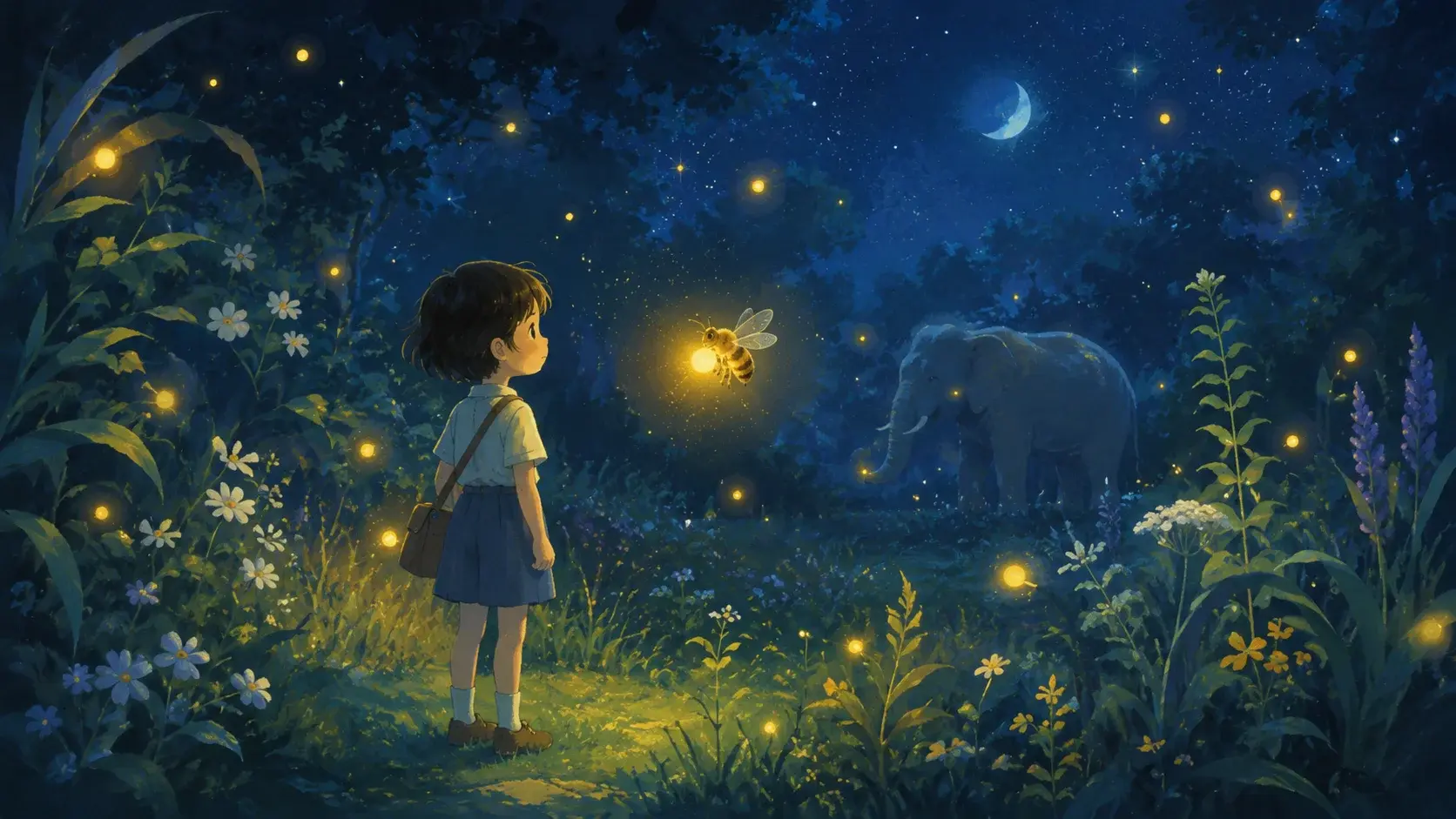
Your child watches a bee land on a flower, lift off, and disappear over the fence. A few minutes later, a dozen bees arrive at the very same flowerbed. How did the first one tell the others where to go?
Animals talk to each other all the time, just not with words. They dance, they drum the ground, they flash in the dark, they hold their bodies a certain way. Once you know what to look for, an ordinary garden turns into a busy conversation. Here are four of the most astonishing ways animals send a message, and the real science behind each one.
Bees dance the directions
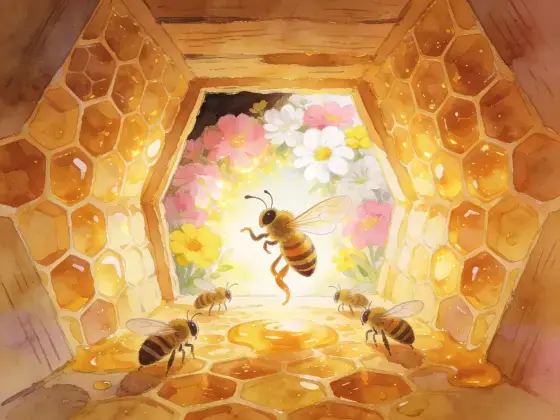
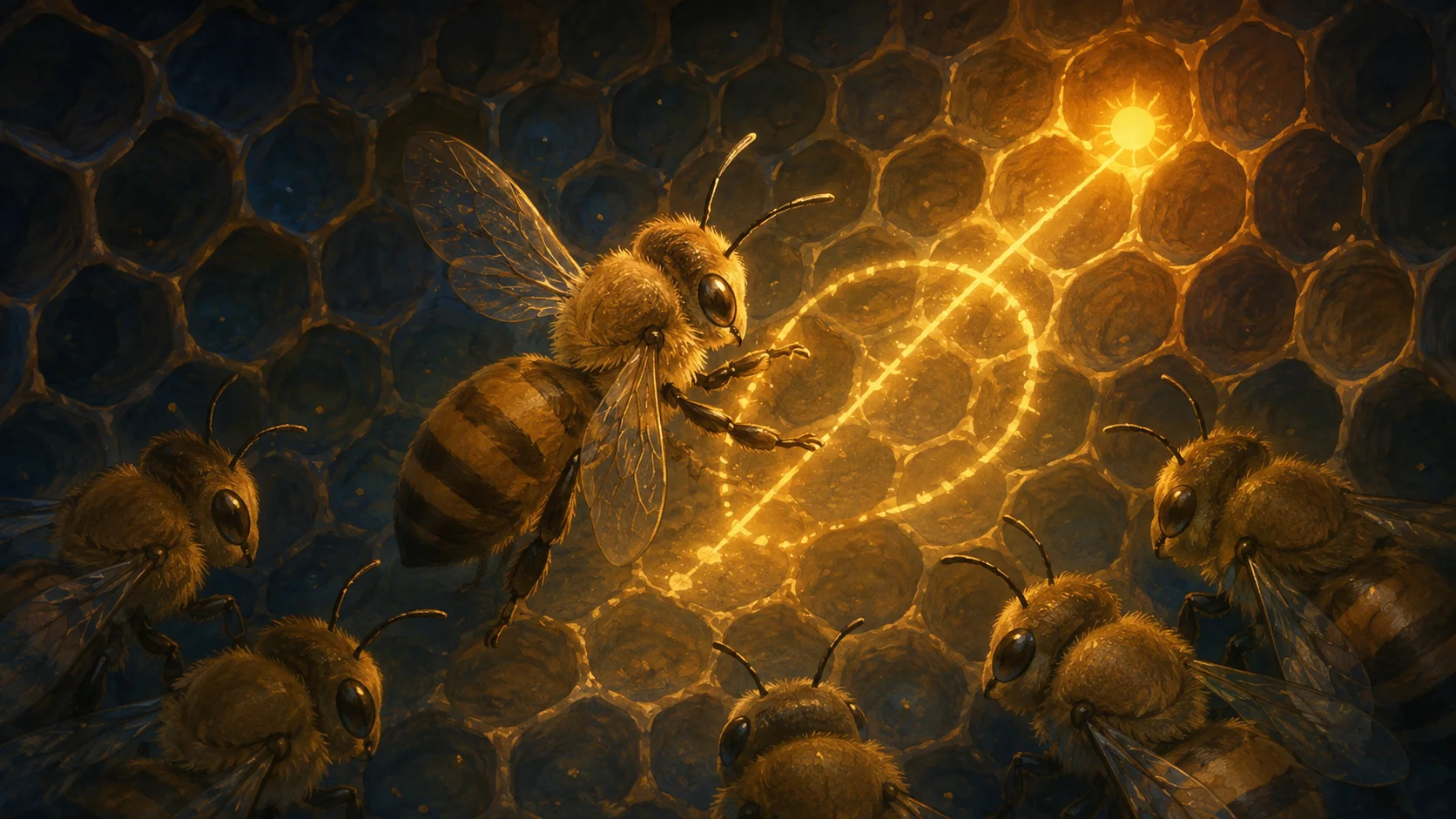
A honeybee that finds a good patch of flowers flies home and dances. On the vertical wall of the dark hive she runs in a straight line, waggling her body, then loops back and does it again. The angle of that waggling run is a kind of map: it copies the angle between the sun and the flowers. Pointing straight up means fly toward the sun. Tilted to the right means head to the right of the sun. The longer she waggles, the farther the food, very roughly a second of waggling for every kilometer.
The wonder is that she does all of this in pitch darkness, turning the position of a sun she can no longer see into an angle her sisters can feel against gravity. The biologist Karl von Frisch decoded this dance and shared the 1973 Nobel Prize in Physiology or Medicine for his work on bees. For years, other scientists argued the bees were really just following scent. Modern radar tracking settled it: bees that watch the dance fly straight to where it points. You can meet that dancing bee in The Dance That Shows the Way.
Elephants speak through the ground
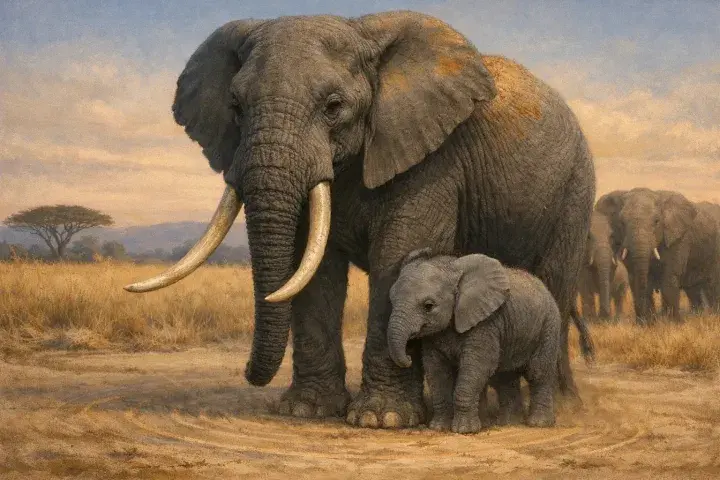
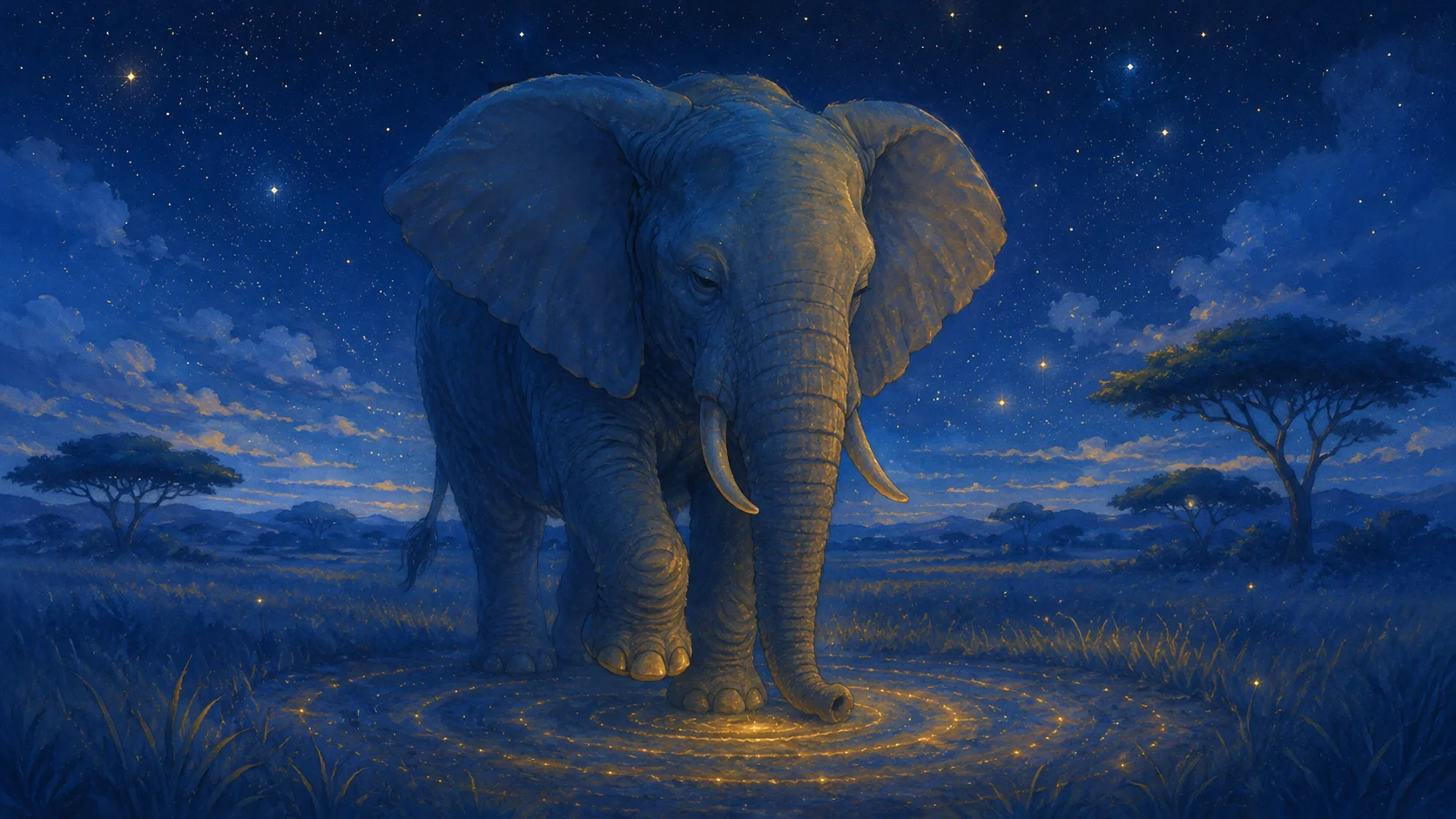
An elephant's deepest call is too low for us to hear. These rumbles dip below twenty hertz, the bottom edge of human hearing, so a person standing nearby might feel a tremble in the chest without catching any sound at all.
The calls travel two ways at once. Through the air, another elephant can pick them up several kilometers away. And down into the earth, as faint vibrations that ripple through the soil. Elephants read those ground tremors with their bodies: their feet are packed with tiny sensors tuned to exactly these low frequencies, so a listening elephant will freeze, lean forward, and sometimes lift one foot, funneling the vibration up through its bones toward its inner ear.
Caitlin O'Connell-Rodwell, a researcher at Stanford, found that wild herds in Namibia reacted to alarm calls sent as ground vibration alone, and reacted more strongly to elephants they knew than to strangers. It is a little like caller ID, felt through the soles of the feet. You can listen in on a herd in The Elephant Family That Talks Through the Earth.
Fireflies flash a password of light
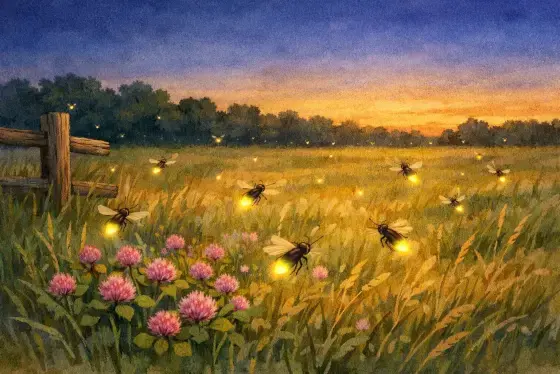
On a summer night, the flashes drifting over the grass are not random twinkling. They are a conversation. Each of the roughly two thousand firefly species has its own code, a particular rhythm and timing, so the right partners can find one another in the dark. In many species the male flies and flashes while the female waits below and answers only when she sees her own species' pattern, a glowing call and response across the lawn.
The light itself is one of nature's quietest marvels. A firefly makes it by mixing a substance called luciferin with oxygen, producing cold light that gives off almost no heat, so the glow stays cool to the touch. (And despite the name, fireflies are beetles, not flies.) The biologist Sara Lewis spent decades studying these signals for her book Silent Sparks. Watch them blink awake in How Fireflies Light Up the Night.

Wolves talk with body, scent, and song
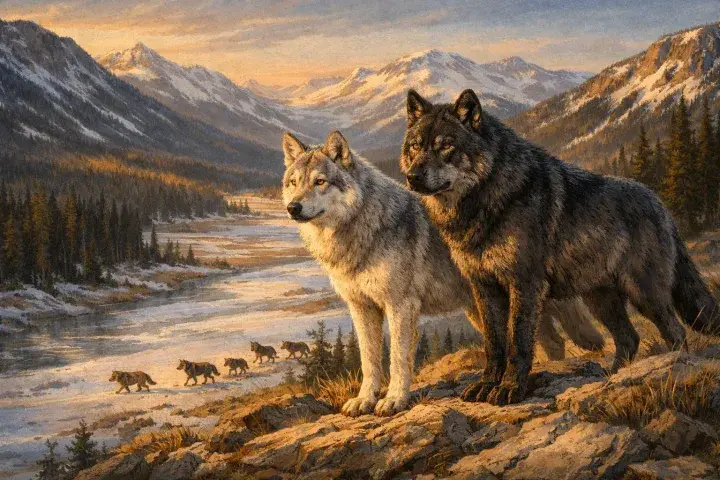
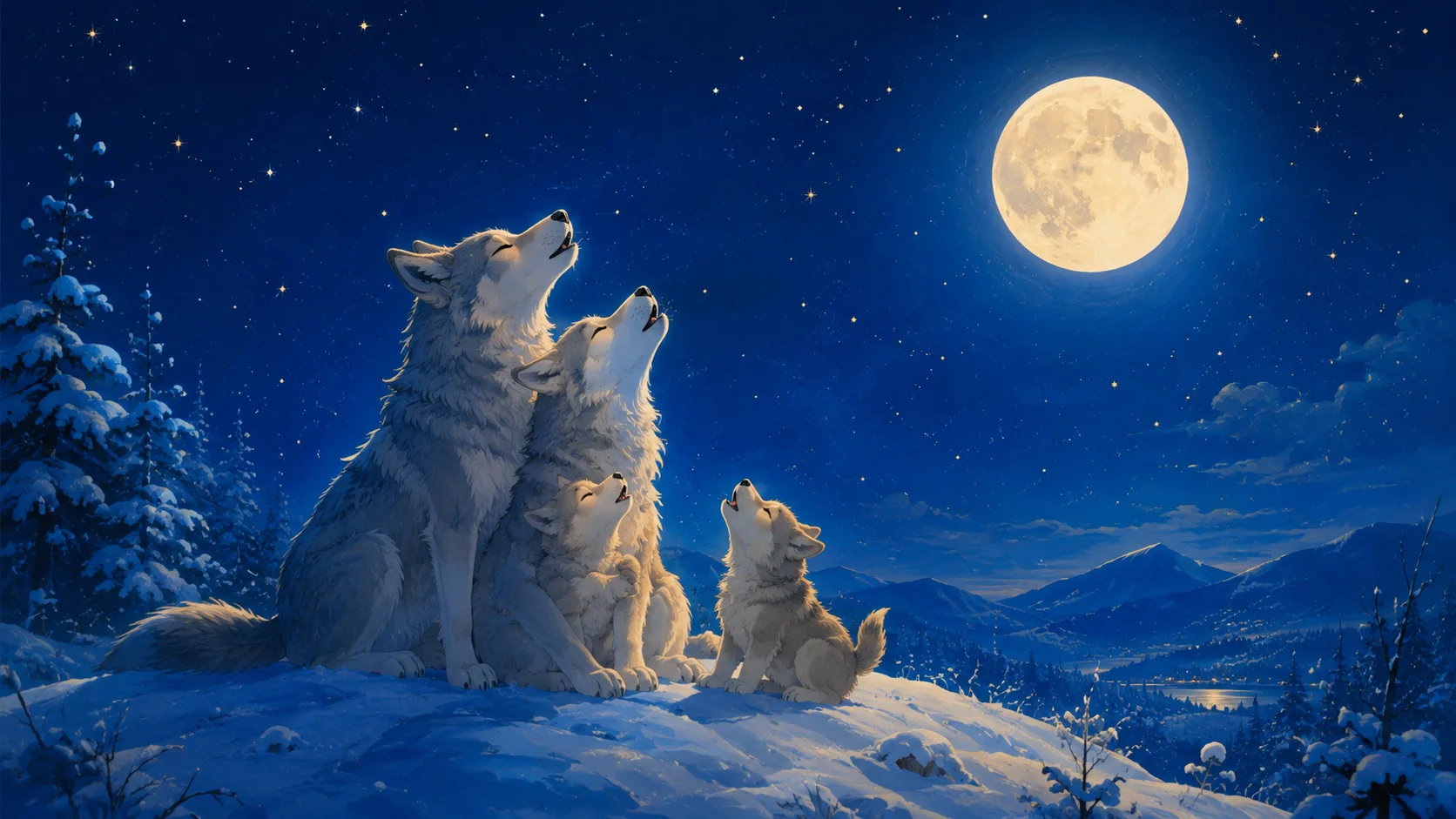
A wolf pack is not a gang ruled by the toughest fighter. It is a family: a mother, a father, and their pups from the last year or two. Much of what they say to each other is posture. Ears up and a high tail signal confidence; flattened ears and a lowered body say "you go ahead"; a deep, bouncing bow invites play. They also leave scent messages, marking the family's land so passing wolves know it is taken.
And then there is the howl, which gathers the pack, sounds an alarm, and carries for miles across forest and tundra. Here is the loveliest trick: when wolves howl together, they deliberately sing on different notes rather than the same one, which makes a small family sound like a much bigger crowd. The biologist David Mech, who once helped make the word "alpha" famous, later spent years with wild packs and asked everyone to drop it, because a wolf parent leads the way any parent does, by taking care of the family. Meet one in How Wolves Run a Family Pack.
A world worth staying curious about
None of these animals use a single word, yet each is sending real, decodable information to the others. That is the kind of true, surprising science that makes a child lean in and ask why, and questions like that are exactly how a curious mind grows.
Every Dreamtime story takes one real wonder like these and tells it gently, narrated and illustrated, calm enough for the end of the day. So the next time your child asks how animals talk to each other, you can answer with a story, and let them drift off a little more amazed by the world outside the window.
Sources
- Karl von Frisch, Nobel Prize in Physiology or Medicine 1973 (shared, for the bee dance language)
- Honeybees encode distance in waggle-run duration (PeerJ, 2021)
- O'Connell-Rodwell et al., wild elephants respond to seismic vibrations (Behavioral Ecology and Sociobiology, 2006); Stanford Medicine, 2007
- Bouley et al., vibration sensors in elephant feet (Journal of Anatomy, 2007)
- Sara Lewis, Silent Sparks: The Wondrous World of Fireflies (Princeton University Press, 2016)
- Lewis and Cratsley, firefly flash signals and mate choice (Annual Review of Entomology, 2008)
- L. David Mech, wild wolf packs are families, not alpha hierarchies (Canadian Journal of Zoology, 1999); Scientific American